Milan AW26
Power shifts, defined by control, or the loss of it.
GUCCI
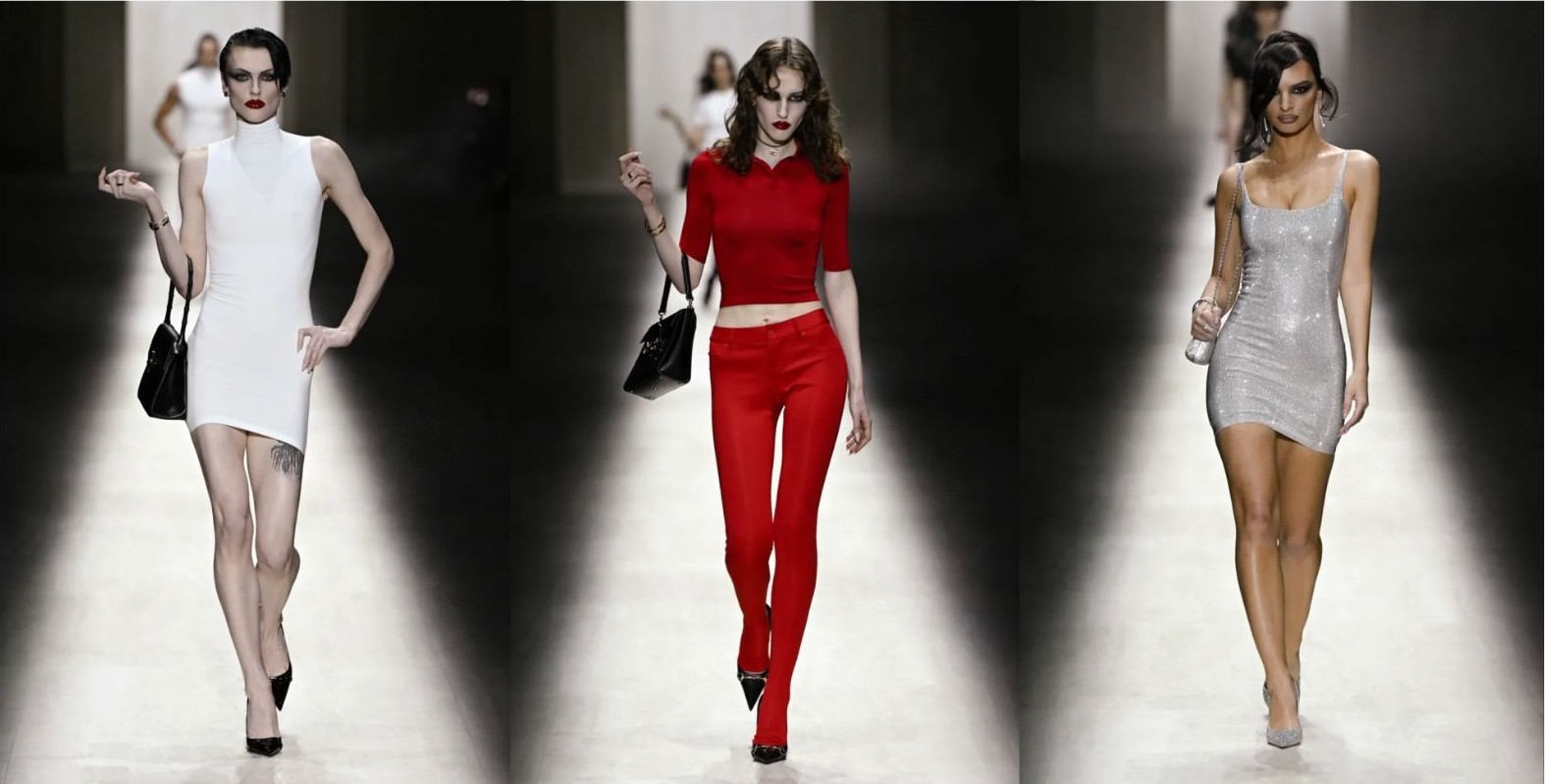
A narrow strip of light cut through an otherwise vast, darkened space, isolating each entrance with clinical precision. Models emerged slowly, navigating towering stilettos thataltered posture and pace. Movement felt deliberate yet strained, with shortened strides and a subtle instability that drew the eye in.
On the body, the clothes leaned into a heightened, overt sensuality. Sheer fabrics, abbreviated hemlines, and body-skimming silhouettes exposed more than they concealed, often anchored by sharp tailoring or flashes of leather. Lace, high-shine finishes, and second-skin layers created a wardrobe built around display, where exposure became part of the design language.
Yet for all its intent, the pieces themselves felt familiar. The reliance on provocation and styling began to outweigh any real sense of development, leaving little that felt unexpected or pushed forward.
The soundtrack moved between heavy techno and softer interludes, layering the mood. The show unfolded in sections rather than a continuous stream, giving each phase its own tone. The insistence on performance began to outweigh the garments.
Overwhelming to watch, yet perhaps underwhelming in what it offered.
DIESEL
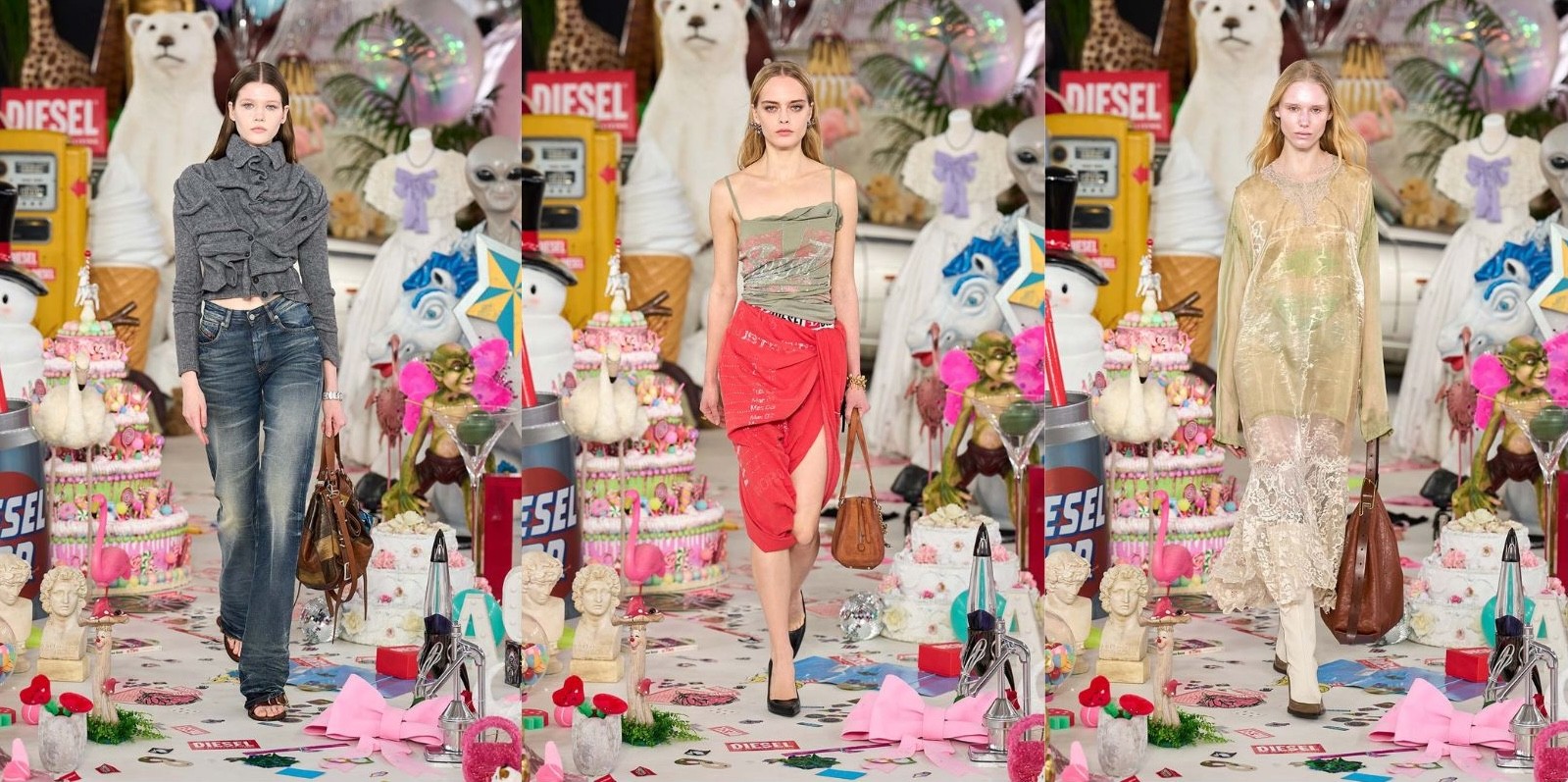
The set dominated before the clothes had a chance to register. A vast, square stage was filled to excess, layered with objects, props, and fragments pulled from across the brand’s history. It read less as environment and more as accumulation. Colourful, chaotic, and visually jarring, the eye struggled to settle, constantly pulled away from the runway itself.
Models moved through what felt like a constructed maze, navigating narrow pathways between densely packed installations. At times, the staging obscured the lower half of the body entirely, interrupting the read of proportion and silhouette. The experience bordered on claustrophobic. Not immersive, but congested.
Diesel describes the set as a “living record” of its identity, an archive reanimated through abundance. That intent was clear. But in practice, the volume diluted its impact. Nothing was prioritised, and as a result, nothing fully landed. The absence of control felt deliberate.
The clothes, when visible, leaned into the brand’s core language. Denim remained central, reworked through proportion, wash, and layering, while outerwear carried a more structured, utilitarian edge. There were ideas here, but they fought for attention against a set that refused to recede.
Here, the noise never resolves into clarity.